Understanding the Bear Diet: An Overview
Bears are some of the most fascinating mammals on the planet, captivating our imagination with their strength, grace, and complex behaviors. One of the most common questions that arise when discussing bears is, "What do they eat?" The bear diet varies significantly across species, habitats, and seasons, reflecting their adaptability and omnivorous nature. Understanding their dietary preferences not only enhances our knowledge of these creatures but also plays a crucial role in conservation efforts and human-bear interactions.
In this comprehensive guide, we will explore the myriad aspects of bear diets, including what constitutes their meals, how dietary habits differ by species, and how external factors like habitat and seasons influence their eating patterns.
What Constitutes a Bear's Diet?
A bear's diet encompasses a wide variety of food sources, largely categorized into plant matter and animal prey. Most bear species are omnivores, meaning they consume both plant and animal foods. However, the proportion of plant to animal intake can vary greatly depending on the species, local habitat, and seasonal availability of resources.
Key components of a bear's diet typically include:
- Fruits and berries
- Nuts and seeds
- Grasses and roots
- Insects and larvae
- Fish and carrion
- Small mammals and birds
The Omnivorous Nature of Bears
Most bears are classified as omnivores, which allows them the flexibility to thrive in various environments. This omnivorous trait is particularly evident in species like the American black bear and brown bear, which often rely heavily on plant-based foods, especially during the warmer months when fruits, nuts, and herbs are abundant. Polar bears, on the other hand, are more specialized in their feeding habits, relying primarily on marine mammals like seals for their caloric intake.
Key Nutritional Needs for Different Bear Species
Each bear species has unique nutritional needs based on its environmental context. For instance, polar bears require high-fat diets rich in calories to survive the arctic cold, primarily focusing on seals as their primary food source. Conversely, the giant panda has evolved to consume a nearly exclusive bamboo diet, showcasing the diversity within bear dietary habits.
Bear Diet by Species: A Comprehensive Breakdown
Black Bears: The Plant-Heavy Feeding Patterns
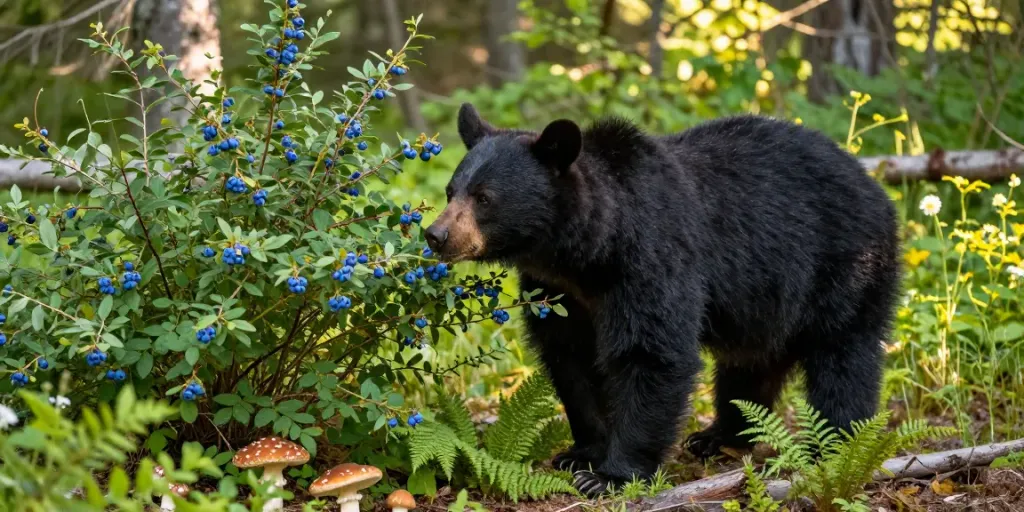
American black bears are known for their diverse and largely plant-heavy diet. In areas like the Great Smoky Mountains, studies indicate that approximately 85% of their diet consists of plant materials. They consume a mix of grasses, berries, nuts, and roots, often shifting their diet seasonally based on food availability. Inhabiting a range of habitats from forests to mountains, black bears exhibit remarkable adaptability in their feeding habits.
Brown and Grizzly Bears: Opportunistic Feeders
Brown bears, including grizzlies, are also flexible feeders, consuming a diverse diet that can comprise up to 80% plant matter, including bark, leaves, and berries, with the remainder consisting of meat such as salmon, rodents, and carrion. Coastal brown bears are particularly known for their fishing prowess, especially during salmon runs, while inland bears may rely more on roots and nuts. Their opportunistic feeding habits highlight their ability to survive in variable environments.
Polar Bears: Specialists in Marine Diets
Polar bears stand out as the most specialized bear species, primarily hunting seals as their main source of nutrition. They are adapted to the Arctic environment, where they rely on sea ice to access their prey. The diet of polar bears is high in fat, and they can consume large quantities in a single sitting to sustain themselves through periods of scarcity.
Seasonal Variations in Bear Diets
Spring: Foraging for Fresh Greens
As bears emerge from hibernation in spring, their diet begins with fresh greens, grasses, and early blooms. This season is crucial for bear recovery after months of fasting, and they often seek out tender shoots and roots that are rich in nutrients.
Summer: Abundance of Berries and Insects
Summer brings a bounty of fruits and berries, such as blueberries and blackberries, providing bears with high-calorie food sources. This is also a prime time for insect foraging, particularly for species like the sloth bear, which feeds extensively on termites and ants.
Fall: Preparing for Hibernation
Fall is the most critical feeding season for bears as they prepare for hibernation. During this time, they enter a phase known as hyperphagia, where they consume large quantities of food to build fat reserves for winter. Nuts, fruits, and fish become essential components of their diet as they stock up on energy.
Impact of Habitat on Bear Feeding Behavior
Forest and Mountain Ecosystems
In forested and mountainous regions, bears often find diverse food options such as berries, nuts, and plant roots. The variability of food sources across different elevations and habitats significantly influences their dietary choices.
River and Coastal Environments
Coastal areas provide rich feeding opportunities for bears, especially those that fish. Rivers teeming with salmon are critical habitats for brown bears, allowing them to gain substantial weight before winter.
Urban Areas and Human Impact
As human development encroaches on bear habitats, bears increasingly find themselves in urban settings. Here, they may be drawn to human food sources, which can lead to dangerous encounters and alter their natural foraging behaviors.
Addressing Common Myths About Bear Diets
Do Bears Prefer Honey Over Other Foods?
Contrary to popular belief, while bears do enjoy honey, it is typically not their primary food source. Bears raid beehives not just for honey but also for the nutritional value of larvae and other substances within the hive.
The Misconception of All Bears Being Carnivores
Another common myth is that all bears are primarily carnivorous. In fact, most bear species are omnivores, using their adaptability to switch between plant and animal foods as resources allow. This flexibility is key to their survival in various ecosystems.
Effects of Human Food on Bear Behavior
When bears learn to associate humans with food, it can lead to problematic behaviors that jeopardize both bears and people. Bears that seek out human food often lose their natural fear of humans, which increases the likelihood of dangerous encounters.
What are the primary food sources for bears?
Bears primarily feed on a mix of plant materials and animal matter, with significant variations depending on the species and environment. Common food sources include berries, nuts, seeds, fish, and insects, which are essential for meeting their caloric needs.
How much does a bear eat in a day?
The amount a bear eats can vary widely based on species, season, and availability of food. Some bears may consume between 20,000 to 30,000 calories a day during hyperphagia, while others might eat less, averaging around 5,000 to 7,000 calories in less productive seasons.
Can bears eat human food safely?
While bears can physically consume human food, it is not safe or healthy for them. Human food lacks the natural nutrients they require and can lead to dependency on unhealthy food sources, which often results in behavior changes and dangerous encounters.
What are the favorite foods of different bear species?
Favorite foods vary significantly across bear species. Black bears favor berries, fruits, and nuts; brown bears enjoy fish, especially during salmon runs; while polar bears predominantly seek seals as their main food source.
How does habitat influence a bear's diet?
Habitat greatly influences the availability of food sources for bears. Forests offer diverse plant life, while coastal regions provide ample marine options. Urban encroachment can complicate their diets by introducing human food sources, altering their natural behavior.